
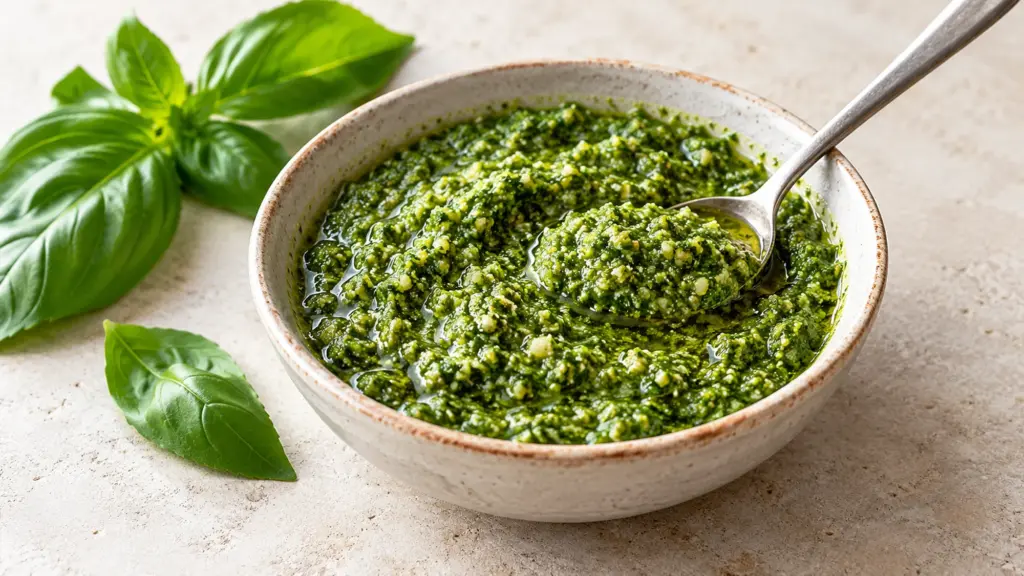
Knowing how to make pesto gives you a fresh, concentrated sauce for pasta, toast and vegetables without turning on the stove. Basil supplies the fragrance, pine nuts give it body, and Parmesan brings a savory edge. This version uses a small garlic clove and a little lemon juice, with enough olive oil to make the chopped ingredients spreadable rather than runny.
Dry the basil well, pulse in short bursts and stop while the sauce still has visible texture. Add pesto to warm food just before serving so its fresh aroma stays at the center of the dish.
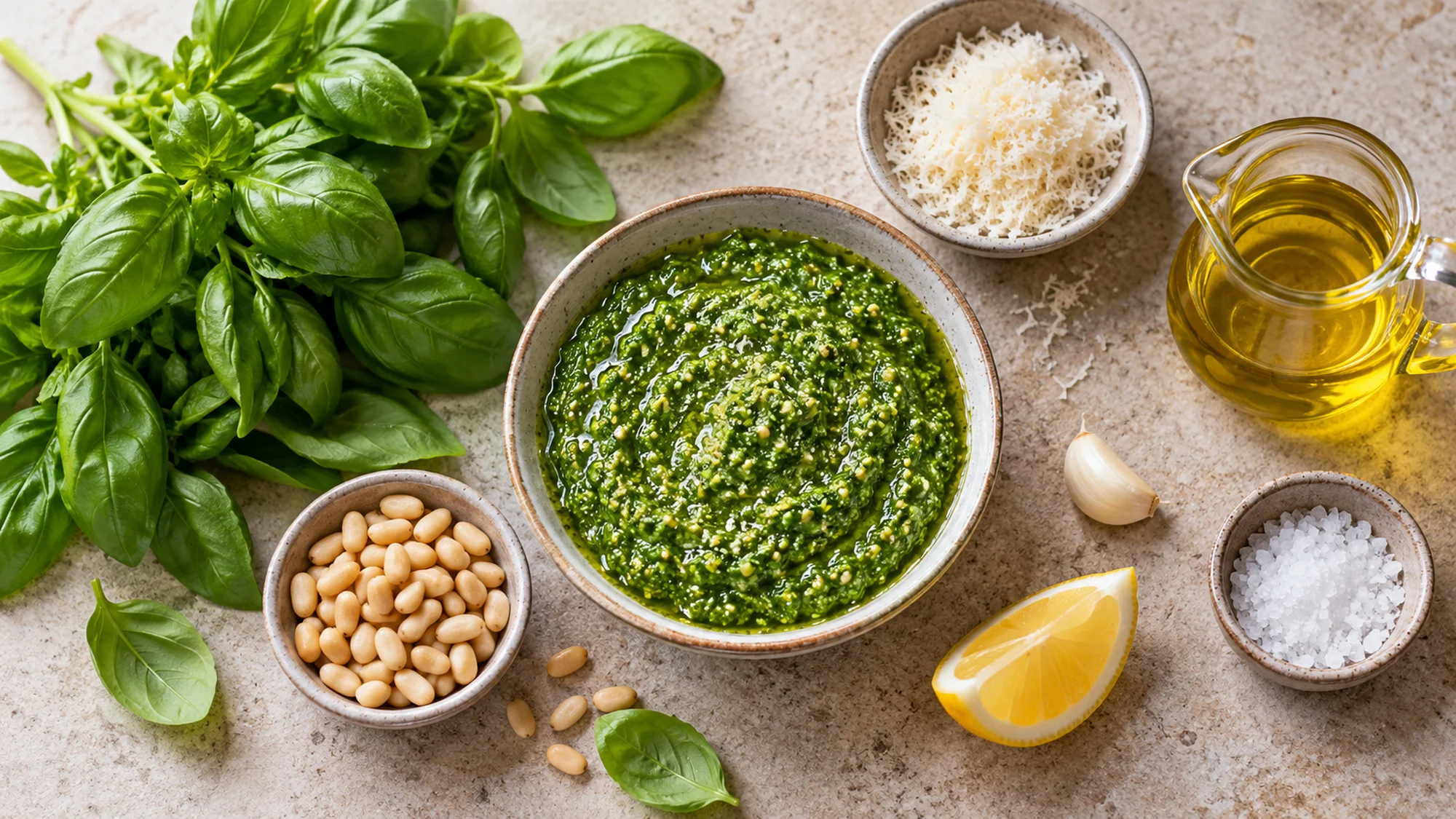
Start with tender basil leaves and thin, soft stems; discard thick stalks. Rinse the leaves and dry them thoroughly in a salad spinner or clean towel. Water clinging to the leaves makes the sauce less consistent. Grate the Parmesan finely so it blends quickly. For the measured batch below, weigh the prepared leaves rather than compressing different amounts into a cup.
How to serve pesto
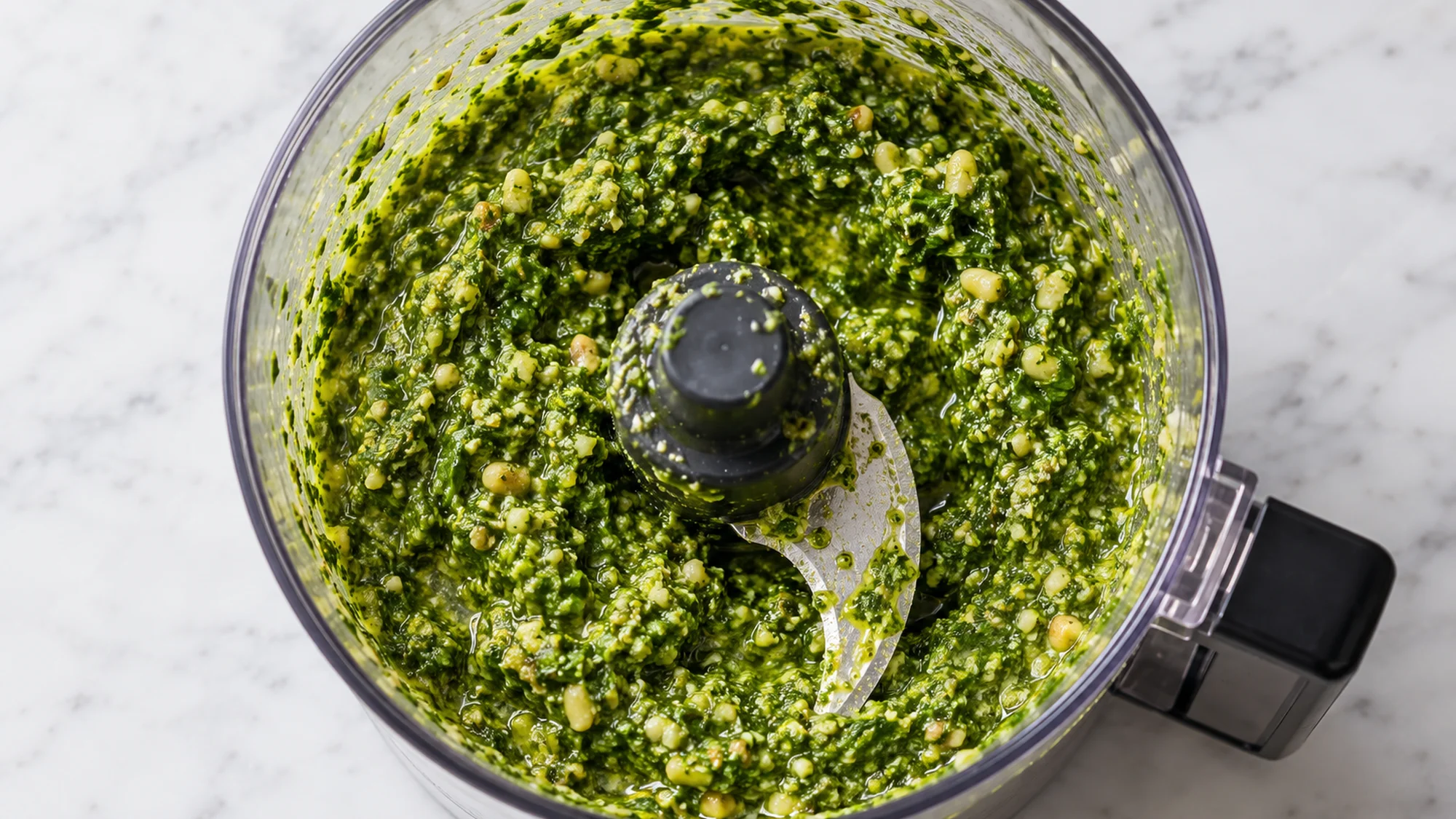
Pulse the pine nuts, garlic and Parmesan until finely chopped, then add the basil, lemon juice and salt. Scrape the bowl once before adding the oil gradually. A small food processor works well for this quantity. If the blade spins above the mixture, stop and scrape down the sides instead of leaving the machine running and warming the sauce.
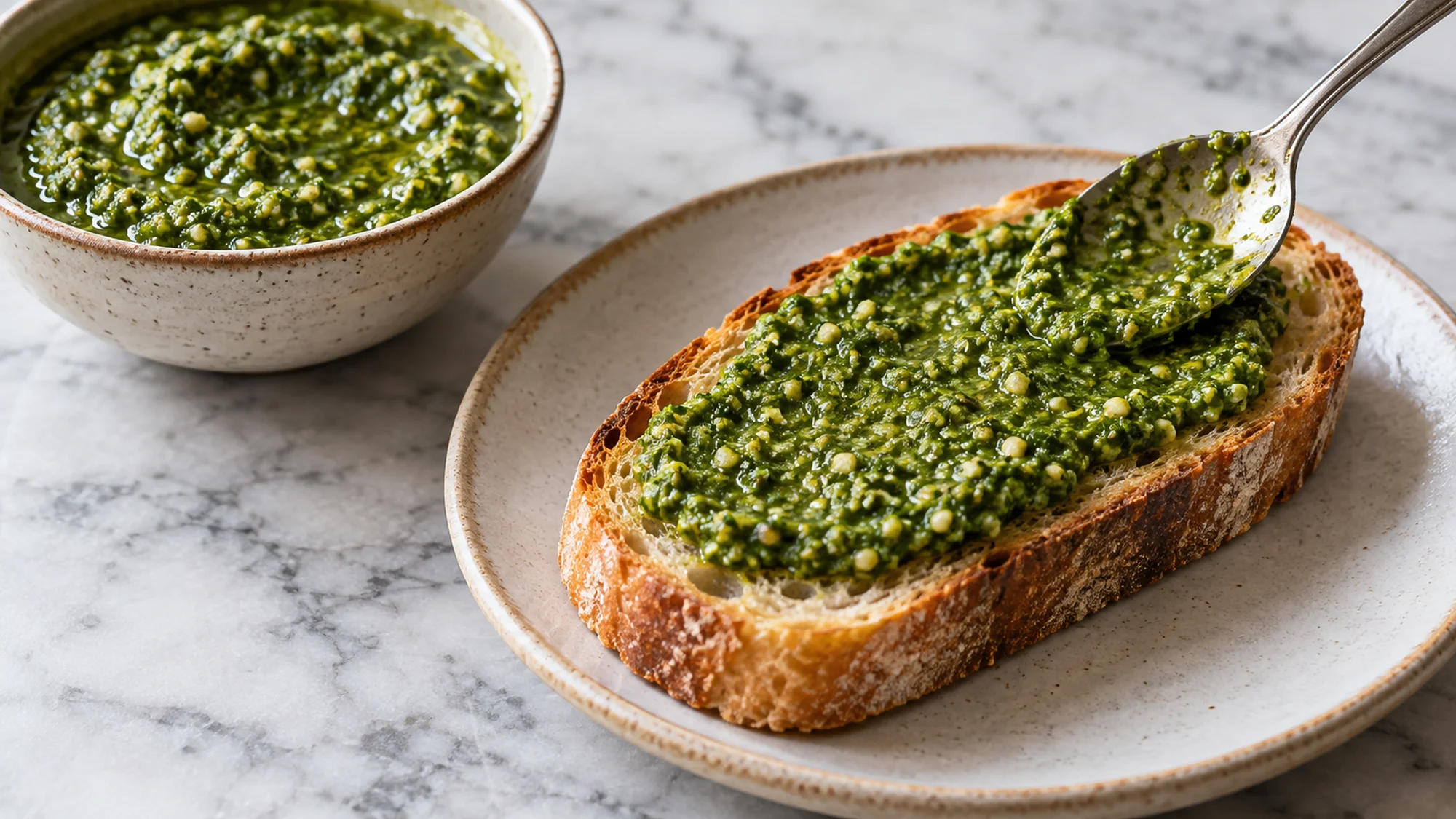
For pasta, put a portion of pesto in a bowl and loosen it with a spoonful of the pasta’s hot cooking water. Add the drained pasta and toss off the heat. Add more water only as needed to coat the noodles. A hard boil is unnecessary. You can also spread pesto thinly on toast, spoon it over roasted carrots, or fold a little into warm white beans.
A spoonful changes a simple meal quickly, but the sauce is concentrated. Begin with less than you think you need, then taste. For a vegetable-forward lunch, serve pesto toast with carrot ribbon salad on a separate plate. Its ginger dressing has a different flavor profile, so keeping the two separate lets each dish retain its own character.
| Use | Desired texture | Adjustment |
|---|---|---|
| Toast or sandwich | Thick enough to spread | Use the sauce as mixed |
| Hot pasta | Loose enough to coat | Stir in a little pasta cooking water off heat |
| Roasted vegetables | Spoonable dressing | Thin only the serving you need |
How to Make Pesto With Different Nuts
Pine nuts have a gentle flavor that leaves room for basil. Walnuts or sunflower seeds can replace them by weight, but they change both taste and allergens. For a vegetarian meal, check that your hard cheese uses vegetarian rennet. For a dairy-free variation, omit the cheese and adjust the seasoning carefully; it will be less savory and will have a different nutritional profile.
This recipe uses raw pine nuts for a mild finish. If you prefer them toasted, warm them in a dry skillet until lightly golden, then cool completely before blending. Warm nuts can heat the basil. Use one small garlic clove first: the sauce is uncooked, so its bite is more noticeable than garlic softened in a pan. More garlic is easier to add than to remove.
The lemon juice is here for flavor. It does not make this recipe shelf stable, and an extra layer of oil on the surface does not remove the need for refrigeration. Oregon State University Extension specifically advises refrigerating homemade pesto for up to four days or freezing it for longer storage. Label the container with its preparation date and freeze small portions promptly if you will not use them in time.
Health benefits and portion notes
Olive oil and pine nuts contribute unsaturated fats, while Parmesan adds some protein and saturated fat. The American Heart Association recommends replacing saturated fats with unsaturated fats as part of an overall eating pattern. That guidance does not turn an unlimited quantity of pesto into a lighter meal: the oil and nuts still make this an energy-dense condiment.
The card’s serving is one-eighth of the batch, not an exact tested spoon measure. Nutrition is estimated from the weighed ingredients and excludes toast, pasta and other accompaniments. Pesto contains milk and pine nuts; check every ingredient for relevant allergy information. Keep it refrigerated at 40°F/4°C or below, thaw frozen portions in the refrigerator and never keep a jar on the counter between meals.
Bottom Line
Fresh basil pesto is a short sequence of chopping, scraping and tasting. Keep the leaves dry, the processing brief and the final sauce slightly textured. Use the printed quantities as a starting balance, then adjust only the portion you are serving. Store the remainder promptly, with the same attention to refrigeration as any other fresh garlic-and-herb mixture in oil.
How to Make Pesto Recipe

Ingredients
- 60 g fresh basil leaves rinsed, dried thoroughly; thick stems removed
- 40 g Parmesan cheese finely grated; vegetarian rennet if needed
- 25 g pine nuts raw
- 1 small garlic clove about 3 g, peeled
- 80 ml extra virgin olive oil about 73 g
- 10 ml lemon juice
- 0.25 tsp fine salt about 1.5 g
Equipment
- Small food processor
- Salad spinner or clean towel
- Fine grater
- Spatula
Instructions
- Rinse and thoroughly dry the basil. Finely grate the cheese. Have all ingredients ready before processing.
- Pulse the pine nuts, garlic and Parmesan in a small food processor until finely chopped. Scrape the sides.
- Add the basil, lemon juice and salt. Pulse briefly to chop the leaves, stopping to scrape down the bowl.
- Add the oil gradually while pulsing just until combined. Stop while the pesto still has fine visible texture; avoid prolonged processing.
- Serve as a spread or condiment. For pasta, thin only the portion needed with a little pasta cooking water and toss off the heat.
- Transfer unused pesto immediately to a clean covered container. Label and refrigerate at 40°F/4°C or below for up to 4 days, or freeze small portions promptly. Thaw in the refrigerator. This recipe is not for canning or room-temperature storage.
Nutrition
Video
Notes
Tried this recipe?
Let us know how it turned out!Hi, I’m Emily Pocker! I share recipes and food guides here at Recipes360 to help you find everyday meal inspiration and feel more confident in the kitchen. My goal is to make cooking approachable, enjoyable, and full of flavor.