

Cottage cheese brings plenty of moisture to a baking sheet, which explains why a thick spoonful does not instantly become a crisp chip. These cottage cheese chips use small, thin portions and a little finely grated Parmesan. The oven has time to drive off moisture while the edges turn golden, and cooling finishes the change from soft rounds to delicate crisps.

Use small-curd cottage cheese, stir away any loose whey and spread the rounds thinly with space between them. Bake until their centers look dry, not merely until the edges color. Cool on the parchment before lifting; a warm, flexible round needs time to firm rather than an impatient tug from a spatula.
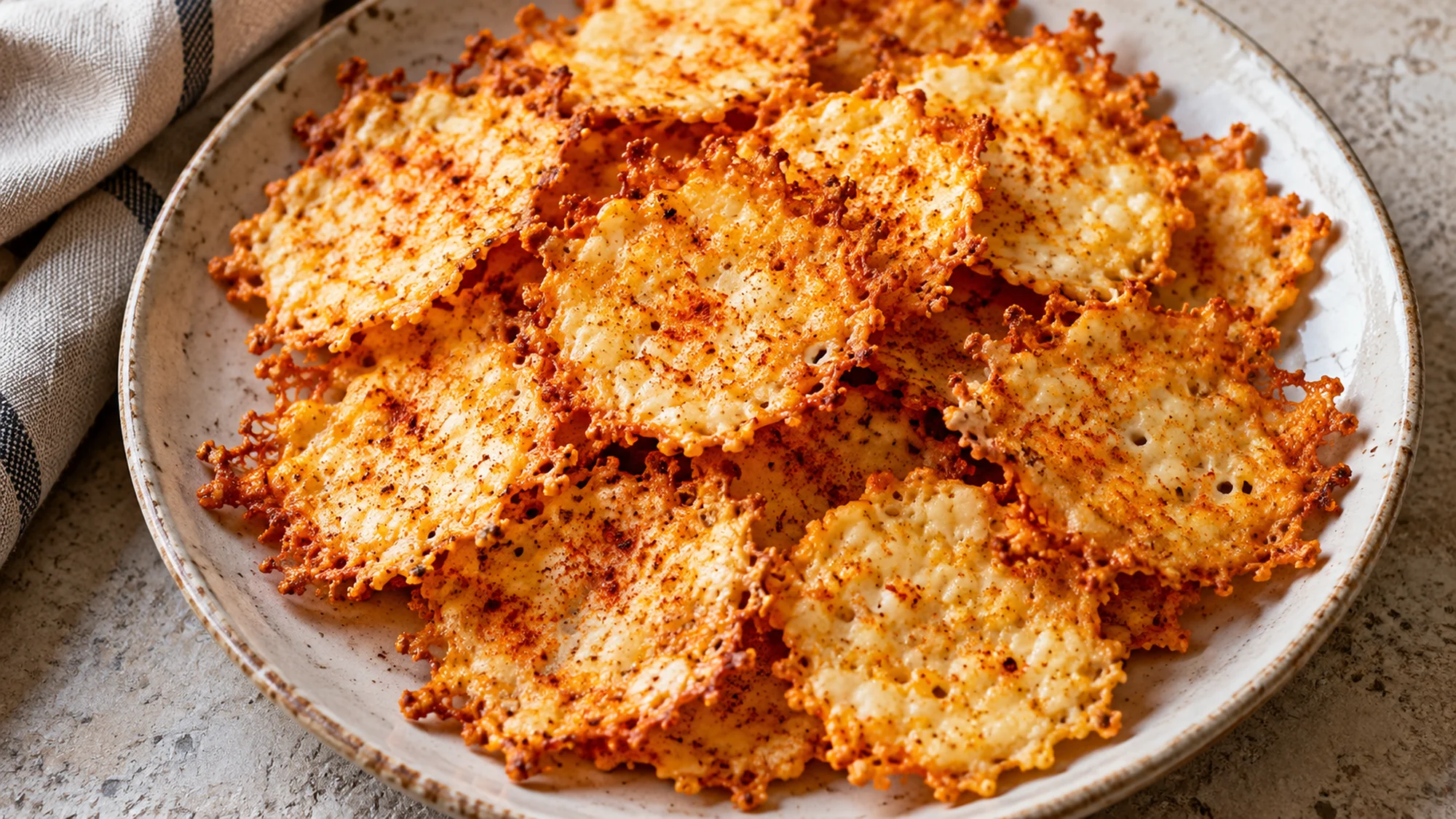
Serving Suggestions for cottage cheese chips
Serve a few chips at a time and keep the rest away from moist toppings until needed. They are delicate cheese crisps, so a heavy scoop of dip can break them more easily than a thick tortilla chip. A small spoonful of dip on the side lets you enjoy the two textures without soaking the whole batch.
I’d pair them with crisp cucumber or a modest amount of cottage cheese caramelized onion dip. The Parmesan already supplies salt and savory flavor, so extra salt is not part of this formula. Taste a cooled chip before deciding that another seasoning is necessary.
- Before serving: lift one cooled chip to assess the center as well as the rim.
- With dip: use a small amount so fragile pieces do not become overloaded.
- For another batch: note your cheese brand and spreading thickness before changing several variables.
These are best eaten on the day they are baked, when the texture is clearest. Let them cool completely before covering, refrigerate leftovers promptly and expect them to soften. A brief oven refresh can help the texture, but it does not make a dairy snack safe after extended time at room temperature.
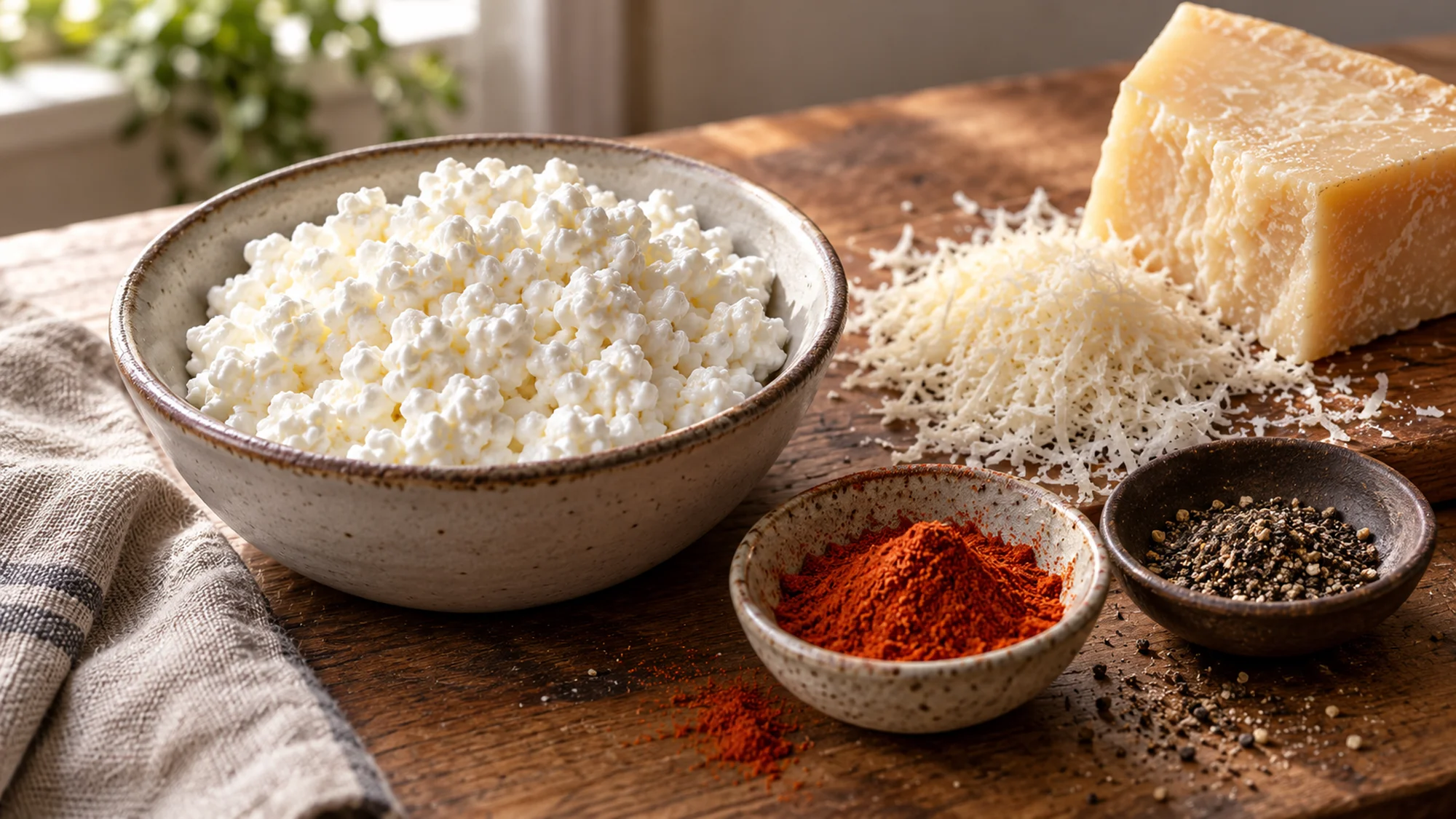
Variations for cottage cheese chips
Moisture differs between cottage cheese brands, and that difference affects both spreading and drying time. Drain obvious loose liquid without squeezing the curds completely dry. If one tray still has soft centers, continue checking in short intervals rather than treating the printed time as a guarantee for every product.
I prefer a restrained amount of Parmesan because it adds browned edges without turning the recipe into a completely different hard-cheese crisp. Grate it finely so it distributes through the curds. A handful of large shreds can leave separate cheese islands instead of helping the small rounds hold together.
The table separates common adjustments from possible problems. Thicker portions need more drying time and may brown unevenly, while very crowded rounds can join as they spread. Use two trays if needed and rotate their positions carefully, keeping an eye on the tray that receives stronger heat.
| Choice | What changes | Useful adjustment |
|---|---|---|
| Wetter cottage cheese | Longer drying | Drain loose whey first |
| Larger rounds | More fragile chips | Keep portions small |
| Thicker centers | Uneven crispness | Spread to an even thin layer |
| More paprika | Stronger seasoning | Start with the measured amount |
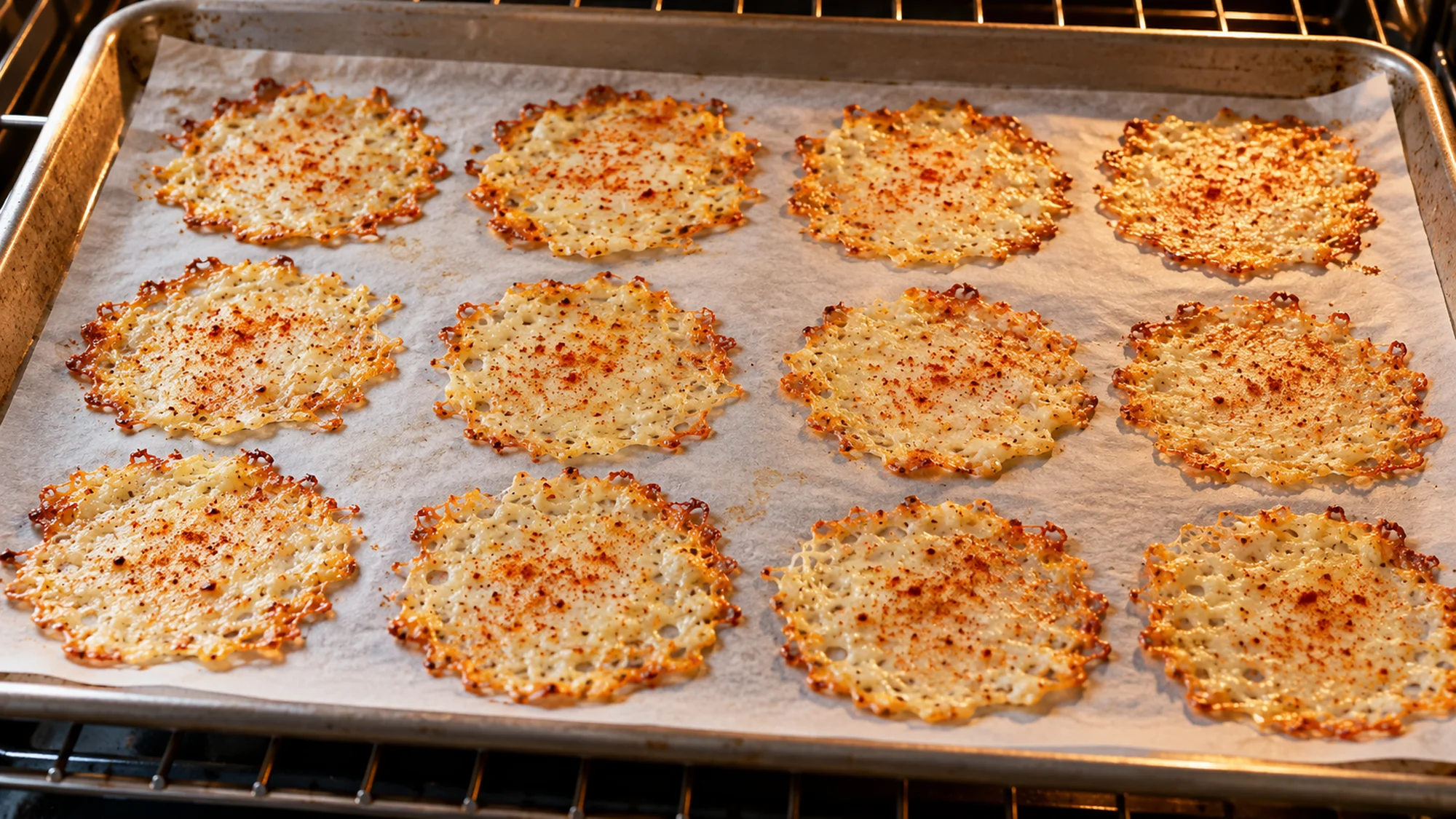
Health Benefits and Portion Balance
Cottage cheese and Parmesan contribute protein, calcium and sodium. The chips are a cheese-based snack, not nutritionally interchangeable with plain potato chips or a serving of vegetables. Their final weight drops as moisture evaporates, so compare nutrition by the stated serving rather than assuming equal weights describe equal portions.
Read both cheese labels if sodium or fat content matters to your choices. Dairy guidance provides broader context without promising that every baked cheese snack has a special health benefit. The card’s estimate includes all the cheese and seasoning, divided into four portions.
Contains milk. Follow safe chilling guidance for leftovers rather than assuming a browned surface establishes shelf stability. This home recipe has not been measured for water activity or long-term storage, so keep the serving window short and refrigerate what you save.
Bottom Line
Thin, even rounds and a patient cooling step are the important choices. I’d judge the centers as carefully as the edges, because a dark rim can hide a damp middle. Expect a light, fragile cheese crisp, and keep the first serving simple enough that you can notice whether the texture needs another small adjustment next time.
Cottage Cheese Chips Recipe

Ingredients
- 225 g small-curd cottage cheese loose whey drained
- 25 g Parmesan finely grated
- 1/4 tsp smoked paprika
- 1/8 tsp black pepper
Equipment
- Two baking sheets
- Baking parchment
- Mixing bowl
- Thin spatula
Instructions
- Heat the oven to 350°F (175°C). Line two baking sheets with good-quality nonstick baking parchment, not wax paper.
- Stir the drained cottage cheese, Parmesan, paprika and pepper together. Divide into about 24 small portions, roughly 2 scant teaspoons each, leaving at least 2 inches between them.
- Flatten each portion to a thin, even round about 2 inches across, avoiding a thick mound in the center. Bake for 35–45 minutes, rotating the trays halfway, until golden and dry-looking through the centers. Check frequently near the end to avoid burning.
- Cool on the parchment for 10 minutes before gently lifting with a thin spatula. If a test chip stays wet and flexible after cooling, return the tray to the oven for a few minutes, checking closely. Serve promptly; refrigerate saved portions within 2 hours.
Nutrition
Video
Notes
Tried this recipe?
Let us know how it turned out!Hi, I’m Emily Pocker! I share recipes and food guides here at Recipes360 to help you find everyday meal inspiration and feel more confident in the kitchen. My goal is to make cooking approachable, enjoyable, and full of flavor.